The Home Energy Assessment and the HEAT Loan
The Mass Save HEAT Loan offers 0 percent financing up to a $25,000 lifetime cap, but book the no-cost Home Energy Assessment first. It is mandatory for whole-home heat pump projects and shapes what you borrow for.
- The house
- An older house with an attic hatch nobody opens, a basement full of old pipe and no recent energy report on file
- The decision
- Book the assessment first, then borrow?
Heating Older Houses · 11 min read · Updated
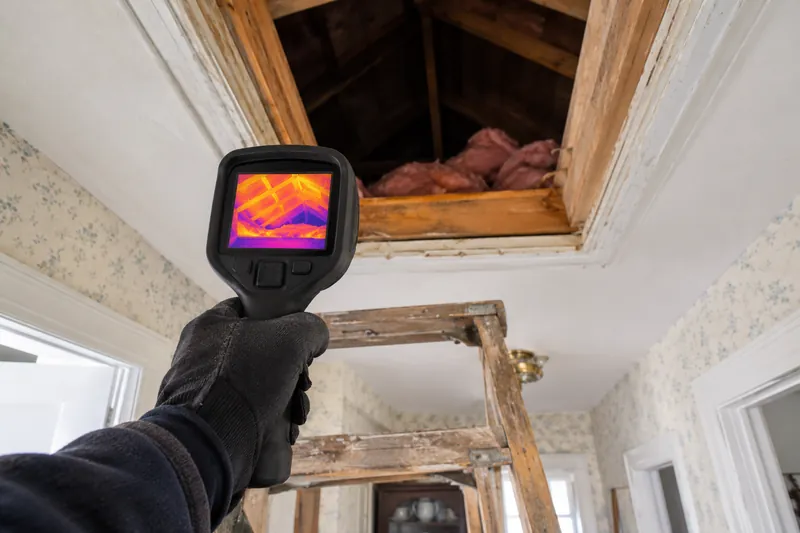
Somebody has to go up through the hatch. In most older houses the attic access is a painted-over square in a closet ceiling, and what lies above it is a mystery to the people living underneath: some loose fill, perhaps, a few boards, a bath fan venting into the dark. The basement is no clearer. A run of white-wrapped pipe disappears behind the oil tank, and a tangle of old wiring crosses the joists.
The usual order of events runs backward from there. A cold winter or a big fuel bill sends the owner looking for heating quotes, the quotes lead to a question about financing, and the financing page mentions a 0 percent loan. The assessment looks like a formality in that sequence, one more appointment to get through on the way to the real decision.
We’d turn that around. Book the assessment before you collect bids and well before you apply for anything. It costs nothing, the whole-home route can’t proceed without it, and it often changes the size of the job you are about to finance.
What does the no-cost Home Energy Assessment actually settle?
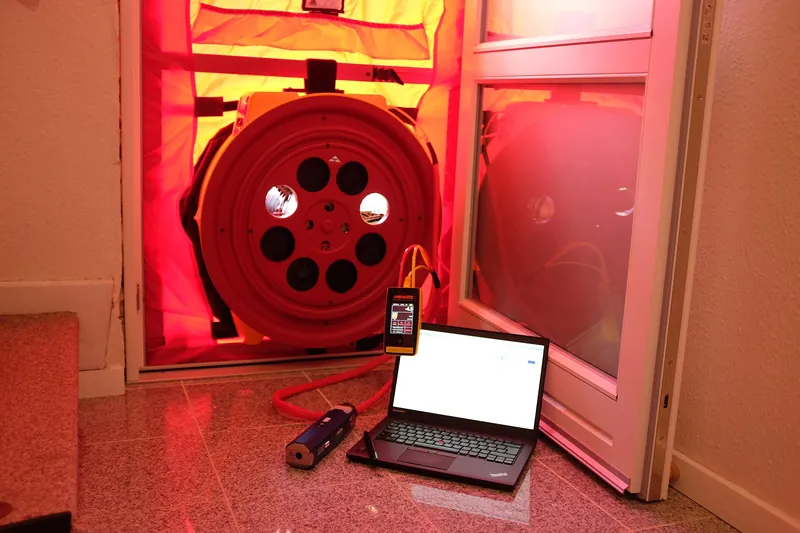
It settles what the program thinks your house needs, in writing, and for most older houses that report opens the door to everything else. The Home Energy Assessment is free for owners and renters alike, in homes of 1-4 units. Three consequences follow from it, and none of them is obvious from the invoice side of the project.
First, it speaks to the whole-home rebate’s weatherization test. For a house built before 2000, the way through runs by an assessment report showing less than $1,000 of recommended weatherization, or by completing recommendations made during or after 2013. Either way, a report has to exist. The rebate story covers the rest of those rules.
Second, it produces the Assessment Site ID that the 2026 rebate form asks for. Hold on to it.
Third, it gives you a list of weatherization work to set against the heat pump bids, and that list can change your load. The U.S. Department of Energy says cold-climate heat pump retrofits often need air sealing first. ENERGY STAR puts sealing and insulation at up to 10 percent savings on annual energy bills, a useful and modest figure that nobody should stretch into a promise. A tighter house also gives a contractor a different starting point for sizing, which is why we’d want bids written after the work is scoped and not before.
Should you book the assessment before you apply for the Mass Save HEAT Loan?
Yes, and on a whole-home heat pump project the question answers itself, because the assessment is mandatory for those jobs. Even on a partial-home job, we’d still do it first. A loan application that goes in before the assessment has to guess at what’s being financed, and the cap on this loan is a lifetime one.
The other date that matters is the application. The financing page and the rebate form both tell you to apply before installing. A paid invoice can’t be turned into a HEAT Loan afterward, so the application has to sit in the sequence ahead of the install.
| Step | What happens | Why it sits here |
|---|---|---|
| 1. Assessment | No-cost visit and written report; keep the Site ID | Sets the weatherization list and opens the whole-home route |
| 2. Barriers | Anything blocking insulation is identified and priced | Sets the real weatherization budget |
| 3. Bids | Heat pump bids written with the weatherization scope in hand | A sizing based on the house as it will be |
| 4. Loan application | Apply for the HEAT Loan with the actual scope | Must come before installing |
| 5. Weatherization | Air sealing and insulation through the program | Whole-home requires it before the install |
| 6. Heat pump install | Installer Network contractor, equipment on the qualified list | Rebate conditions |
| 7. Rebate paperwork | Form, invoice, proof of payment, verification form if whole-home | For a 2026 install, received by Feb. 28, 2027 |
If you’re trying to finish within 2026 at this year’s rates, the same order applies; it’s just tighter. We have no sound figure for how far ahead assessments are booking this fall, so ask when you call for a date, and don’t assume.
What does the HEAT Loan cover, and how does the cap work?
It covers weatherization, the pre-weatherization barriers that stand in the way of insulation, heat pumps and heat pump water heaters, all at 0 percent, up to a lifetime cap of $25,000 effective Jan. 1, 2025. The applicant must be the homeowner. The cap runs across all of a customer’s upgrades, which is the feature to think about.
It’s easy to read $25,000 as a project limit, but it works more like a lifelong ledger. Picture a house, purely as an example of the arithmetic and not of what any job costs, where the owner borrows $18,000 this year. The sum is $25,000 minus $18,000, which leaves $7,000 available for every later upgrade. If the boiler stayed for now and leaves in five years, or the water heater needs replacing when the chimney question comes up, that $7,000 is what’s left at 0 percent.
So decide in advance what you most want the loan to do. Think hard before spending lifetime room on the smallest line in the job. If you’ve borrowed under this program before Jan. 1, 2025, ask how that history counts, because we can’t tell you how a specific account is treated.
We couldn’t confirm the loan term, so we won’t print a monthly payment. Get the term in writing from the lender before comparing it to anything else, and ask how a rebate arriving 6-8 weeks after approval fits with the balance. The rebate form names the HEAT Loan as the one offer that can be combined with a rebate on the same equipment, so using both is allowed.
What happens to the insulation budget after the assessment?
The report turns it into a specific figure, and for most owners the program pays a good share. Mass Save has published this offer: recommended insulation at 75 percent off, up to $2,000, with air sealing at no cost. Confirm what’s current when the assessor visits. The insulation and air sealing page is the place to check, since the figure we found sits on an undated welcome page.
If that figure holds, the arithmetic is short. Divide $2,000 by 0.75 and the ceiling arrives at about $2,667 of recommended work. Up to that point you pay a quarter. Take a hypothetical $2,400 proposal, which is an example and not a price: 75 percent is $1,800, you owe $600, and the cap hasn’t been touched. Past $2,667, each extra dollar is yours, which is where the loan may earn its place.
One question for the assessor is worth asking outright. The whole-home test turns on less than $1,000 of weatherization recommended. The form doesn’t say whether that figure is before or after incentives. Ask how your report will be read, because a house just over the line would have to complete the recommendations to get through by the other route.
If your income may qualify, the sequence shifts in your favor. Income-based customers get recommended weatherization free once verified, and the enhanced rebate requires that it comes first. Panel or health and safety work standing in the way may also be paid for, as much as 100 percent of it.

What if the assessor finds a barrier in an older house?
Then the barrier gets dealt with by the right licensed trade before anyone insulates over it, and the loan’s coverage of pre-weatherization barriers exists for this. In old houses the usual suspects are predictable. Knob-and-tube wiring is one that Mass Save names. Leave it to a licensed electrician; it isn’t weekend work.
Loose attic fill is another. The EPA describes vermiculite as looking like pebbles, in gray-brown or silver-gold, and tells owners to treat it as possibly contaminated with asbestos and to leave it alone. So if you open that hatch and see pebbles, close it again and tell the assessor. The white wrap on basement pipes is in the same family. The EPA says wrap in good condition is generally safest left undisturbed, and in Massachusetts removal belongs to a licensed contractor. We go through who touches what in the Colonial story on asbestos and lead, including painted trim in pre-1978 houses, which is a lead matter for certified renovators when anyone is paid to disturb it.
Air sealing raises one more issue in a house that still burns fuel. A tighter house changes how air moves around a boiler, a furnace or a water heater, and the gap around a flue needs special sealing techniques. Leave that to the crew. Combustion safety checks after air sealing are for professionals, so ask who will do them and when, and get the answer before the crew arrives. The story on what happens when a boiler leaves and a water heater stays follows the chimney end of the same problem.
Can renters and landlords use the assessment and the loan?
Renters can use the assessment, and only homeowners can use the loan. The no-cost visit is open to owners and renters of 1-4 unit homes, but the HEAT Loan applicant must be the homeowner, and a landlord must approve any upgrades.
For landlords the assessment can pay handsomely. The published offer for renter-occupied units in 1-4 unit buildings is 100 percent off approved insulation, while owner-occupied units in the same building don’t qualify for that rate. That page carries a second, different figure for individual units too, so landlords should treat 100 percent as the published renter offer and check it with the program. Some money also goes to barriers, knob-and-tube wiring among them. In a triple-decker, the choice about the building’s envelope usually sits with the owner or association, not with a tenant on the second floor, and our story on who decides sets out how those lines fall. A building-wide air sealing plan raises its own questions, covered in the piece on balloon frames and back porches.
It’s easy to read $25,000 as a project limit, but it works more like a lifelong ledger.
Book the assessment first, then borrow. There’s no cost to the visit, and the whole-home route can’t move without it. Almost every other number in the project gets firmer once the report exists.
What it comes down to
- If You plan a whole-home heat pump
- Then The assessment isn’t optional: book it first and keep the Site ID for the rebate form
- If You have a report from 2013 or later
- Then Find it, check which recommendations you completed, and ask whether it still serves
- If The attic shows pebble-like fill or the pipes show old white wrap
- Then Don’t disturb it; tell the assessor, and budget for licensed abatement before insulation
- If You may want more upgrades within a few years
- Then Treat the $25,000 cap as a lifetime ledger, and decide how much this job should use
- If You rent your home
- Then Ask for the assessment yourself and take the report to your landlord, who has to approve the upgrades
Also asked
Do I need a heat pump plan before I book?
No. The visit looks at the house as it stands, and you don’t have to commit to anything afterward. Telling the assessor you’re considering a heat pump is still useful, because it focuses the conversation on what would have to happen first.
Does the HEAT Loan pay for removing an old oil tank?
The published list of what it covers names weatherization, barriers to weatherization, heat pumps and heat pump water heaters. Tank removal isn’t on that list. If you’re counting on it, ask the lender. Otherwise budget for it separately, and see what happens to the tank after you switch.
Should I take out the loan if I could pay cash?
That depends on your own finances, and we aren’t financial advisers. The practical trade-off is plain enough: 0 percent means no interest on the balance, while borrowing uses room under a lifetime limit. Read the lender’s terms before deciding.
Is the assessment the same as a HERS rating?
No. The Home Energy Assessment is a Mass Save program visit, while a HERS rating is a code path that applies to certain larger alterations. If your job is big enough to raise that question, read the stretch code story.
Where this comes from
- Mass Save financing and HEAT Loan: 0 percent terms, lifetime cap, who may apply, mandatory assessment, what’s covered
- Mass Save rebate form for 2026, National Grid’s copy: Site ID, weatherization tests, applying before installing, HEAT Loan exception
- Mass Save insulation and air sealing and welcome page: published insulation offer
- Mass Save, enhanced incentives for income-based customers: income-based weatherization and panel work
- Mass Save page for 1-4 unit landlords: renter-occupied insulation offer, knob-and-tube, landlord approval
- DOE, envelope work and heat pump installation: air sealing first
- ENERGY STAR, seal and insulate and furnace flues: savings figure, flue sealing
- EPA, vermiculite insulation and asbestos exposure: don’t disturb
- EPA, Renovation, Repair and Painting Program: lead paint rule
- Mass.gov, smoke and carbon monoxide alarms: alarm rule and response