Who Decides About the Heat in a Triple-Decker?
In a rented Massachusetts triple-decker, the landlord decides on a heat pump and owes tenants the legal heat. Renters can ask and book an assessment but can’t order the work; in a condo, the association controls common areas.
- The house
- A Massachusetts three-decker with one owner or three, and anywhere from no tenants to three households
- The decision
- Owner, tenant or condo association: whose call is it, and who pays?
Heating Older Houses · 11 min read · Updated
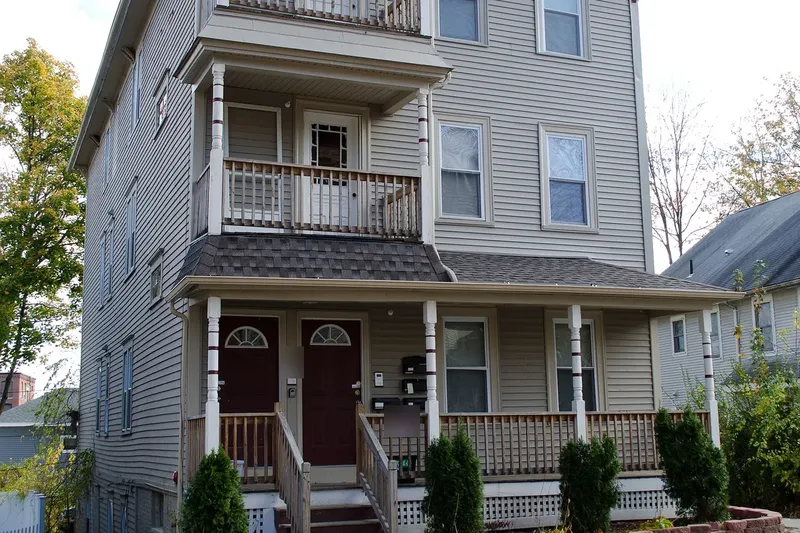
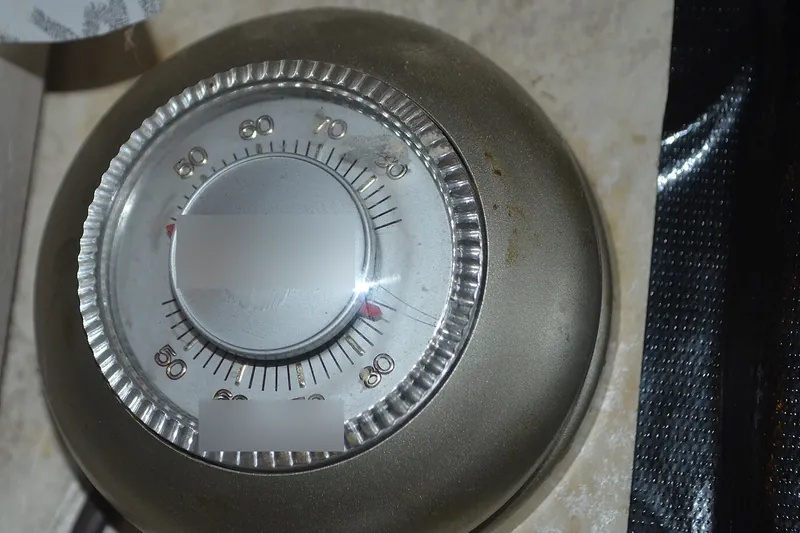
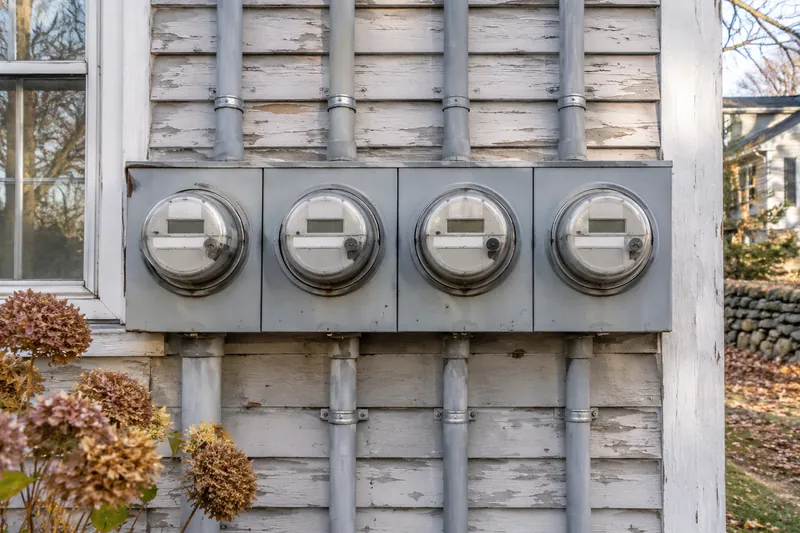
A three-decker keeps its arguments in the hallway. The thermostat on the second-floor wall may control only the second floor, or it may run the whole house while the third floor swelters and the first floor wears sweaters. The meters on the side of the building may tell you who pays for what, or may tell you nothing, because one of them feeds everybody. And the paperwork in a kitchen drawer somewhere says who owns the place: a single name, or three separate condominium deeds and a set of trustees who meet twice a year.
Picture the usual moment. A tenant reads about heat pumps. An owner hears about rebates. A condo trustee gets a question about a bracket on a wall. All three are reasonable people, and each assumes the decision is at least partly theirs. Massachusetts answers most of this fairly clearly, once you separate three questions that tend to get mashed together: who owns the equipment and walls, who owes the heat, and who holds the account the rebate attaches to.
We aren’t lawyers, and leases and master deeds differ. But the outline is firm enough to give a straight answer, and in a rental the answer is that the owner decides.
Can a tenant decide to get a heat pump in a Massachusetts rental?
No. A tenant can start the conversation but can’t order the work. The installation goes through walls the tenant doesn’t own, and Mass Save’s published page for landlords of one-to-four-unit properties says plainly that the landlord must approve upgrades.
What a tenant can do is more than people expect. The Home Energy Assessment is available at no cost to owners and renters of homes with one to four units, so a renter can get the visit that produces the list of recommendations, then hand that list to the owner. Tenants who are cold have stronger tools still, and those come from the state sanitary code, not from any energy program.
The rule that most affects these conversations is one a tenant doesn’t have to ask for. The state’s guidance on the heating season sets the owner’s duty, whatever system does the heating, and it’s covered in the next section. A tenant who thinks the apartment is under the line can request an inspection, and after a confirmed violation the board of health orders a good-faith correction within 24 hours. A heat pump project doesn’t suspend any of that.
What does a Massachusetts landlord owe tenants on heat, even after a heat pump?
The same minimums as before, on the same dates. The owner provides heat from September 15 to May 31, though a local board may shift that by up to 15 days, with the end no earlier than May 15 and the start no later than September 30. Those requirements come from the state’s winter heating rules, and a change in equipment doesn’t alter them.
| Period | Rooms covered | Requirement |
|---|---|---|
| 7 a.m. to 11 p.m. | Habitable rooms and bathrooms | At least 68 degrees F |
| 11:01 p.m. to 6:59 a.m. | Habitable rooms and bathrooms | At least 64 degrees F |
| Any time | Any room | Not above 78 degrees F |
That last row catches people out. An old system that overheats the top apartment can break the rule from the other side, and a poorly balanced conversion can do the same. There’s also a statute with teeth behind it: Massachusetts General Laws chapter 186, section 14 applies penalties and possible damages to a landlord who is required to furnish heat and willfully or intentionally fails to do so. The practical consequence for an owner considering a conversion: Worcester County’s 99 percent design temperature is 2 degrees F, a cold only about 1 percent of the year’s hours go below, and a rented apartment still has to make 68 by day when it comes. Size for it, and read the bid closely enough to confirm the installer did.
Who pays when a heat pump moves the heat to a tenant’s electric meter?
The lease says who pays, within state law, which is why the lease must change before the system does. Consider what the conversion does. Suppose a landlord now buys the oil or gas for a shared boiler, and the heat pump will run off each tenant’s electric account. The heat has moved from the owner’s bill to the tenant’s, and the rebate form warns that electricity use climbs after a conversion, except in homes already on resistance heat, and that new cooling raises summer use on top.
The owner buys the machine, the tenant may pay to run it, and the lease has to say so before anyone drills.
Chapter 186, section 14 also penalizes a landlord who moves responsibility for a utility bill onto an occupant without the occupant’s knowledge or consent. We haven’t tried to summarize the rest of the rules on charging tenants for heat, because we could not confirm them from the state’s own pages and the details turn on the lease and the wiring. Before moving heat onto a tenant’s meter, ask your local board of health or a landlord-tenant attorney what the arrangement has to look like. Don’t assume that a new system means a new deal for an existing tenant.
The money side has a useful feature in the owner’s favor. The form allows a property owner who pays for the install to be the rebate payee for individually metered rentals where the tenant is the account holder, with the tenant’s permission. So the owner pays and receives the rebate, while the account stays in the tenant’s name, and the tenant has to agree. That’s a second reason to have the tenant in the conversation from the start.
The owner buys the machine, the tenant may pay to run it, and the lease has to say so before anyone drills. Where a shared meter feeds the whole house, there’s less to argue about but also less rebate: one meter makes the building eligible for one rebate, as Mass Save publishes it. Our story on converting floor by floor follows that through, and the rebate guide has the amounts.
What can renters and landlords get for insulation in a 1-4 unit building?
More for rented floors than for owner-occupied ones, as published. Mass Save lists 100 percent off approved insulation for renter-occupied units, with incentives toward barriers such as knob-and-tube wiring; owner-occupied units don’t qualify for that offer. The same page also mentions a different figure for individual units, so landlords should confirm the current number at the assessment. If you’re the owner-occupant of a three-decker, expect your floor and your tenants’ floors to be treated differently, and ask the assessor to spell out how the shared attic and basement are handled.
The financing runs one way too. The HEAT Loan is a 0 percent loan with a lifetime cap of $25,000 across all of a customer’s upgrades, and the applicant must be the homeowner. A tenant can’t borrow against the building. Details are in our piece on the assessment and the HEAT Loan.
If the three-decker is condos, what can the association stop?
Quite a lot, because most of what a heat pump touches is usually common property. Under Massachusetts condominium law, common areas include, unless the master deed provides otherwise, main walls, roofs, basements, yards and installations of central services such as heating and air conditioning. So in a condo three-decker an outdoor unit in the yard, a bracket on the wall, a line set on the clapboard and the shared boiler are likely to be the association’s business, not one owner’s.
That doesn’t mean a unit owner has no room. The inside of your own apartment is generally yours, and the association’s role usually begins where the work leaves it. The papers vary, so read yours. Getting written approval costs you an email or a meeting, and a bracket taken down later costs far more.
Larger shared projects have their own arithmetic. Section 18 of the condominium law sets the thresholds for improvements to common areas: with owners holding at least 50 percent but under 75 percent in agreement, the cost falls on those who agreed; at 75 percent or more, it can be assessed to all as a common expense, with a further protection for dissenters on very large projects. How those percentages are counted in a three-unit building is a question for the master deed and the association’s attorney. Note too that section 10 of the law lets an association install certain energy devices, storm windows among them, as a common expense, and a majority vote at a properly noticed meeting keeps them out of the section 18 process, though the statute limits this to units not already separately metered for water and utilities, which matters in a building with three meters. Whether a particular measure fits, your association’s attorney should say.
Who handles permits, alarms and old paint?
The owner carries these, whoever had the idea. In Worcester, the building department handles mechanical, electrical and related permits, and the residential mechanical application covers up to three dwelling units. The city’s landlord guide says building permits are required when installing or altering equipment in buildings, and when changing or moving an egress or the supports around it, which is worth remembering on a house with rear porches. Other towns run their own departments; ask yours.
Safety duties stay put during the work. Under Nicole’s Law, landlords install and maintain carbon monoxide alarms in units with a CO source, and most homes need those alarms on each level, a lived-in basement or attic included. A building where one floor has converted and two still burn fuel still has CO sources, so don’t let alarms go missing in the shuffle. When one goes off, the whole household leaves first and dials 911 once outside. If anyone smells gas, leave first, touch no switches or phones inside, and call 911 and the gas utility from outside using the emergency number on its website or bill.
Old paint falls to the owner as well. EPA’s lead renovation program covers pre-1978 housing, requires certification for anyone paid to disturb paint, and reaches owners who let part of the house. Massachusetts runs its own authorized program. Our asbestos and lead story goes through the steps; the short rule for tenants and owners both is not to disturb old pipe wrap or scrape old paint to make way for anything.
In a rental, the owner decides and the heat rules follow the owner. In a condo, the association has the outside of the building. A tenant’s real power is the assessment visit, the inspection right and a fair conversation about the bill.
What it comes down to
- If You rent and want a heat pump
- Then Book the no-cost assessment, then put the recommendations in front of the owner in writing
- If You own and rent out the floor
- Then Settle who pays for electricity in the lease before signing a contract, and get the tenant’s permission for the rebate payee arrangement
- If You own a condo unit in the building
- Then Get written association approval for anything outside your walls before paying a deposit
- If You rent and the apartment is under 68 degrees in the day
- Then Ask the owner first, then request an inspection from the local board of health
- If One meter feeds all three floors
- Then Plan for one rebate, and ask an electrician what separating accounts would involve
Also asked
Can my landlord raise my rent because a heat pump was installed?
That depends on your lease and when it renews, and it’s a question for a tenant organization or an attorney, not a heating magazine. A tenant should read any new lease closely if it also moves the cost of heat onto their electric account. Ask for the arrangement in writing.
If the heat pump breaks in January, whose problem is it?
Where the owner is required to provide heat, the temperature rules apply whichever machine failed. Report it to the owner in writing and keep the date. If the apartment stays below the minimum, you can request an inspection from the board of health.
Can a landlord keep the old boiler and add heat pumps only for cooling?
An owner can, but it’s a different rebate question, because partial-home has its own control and removal requirements on the form. The old system stays responsible for the heat. Ask the contractor which tier that installation would fall under before assuming any rebate at all.
Does a three-unit condo have to hold a formal meeting for a small bracket?
Read the master deed and bylaws, since they set the procedure and some small associations run informally. A signed note from the trustees, kept with the unit’s papers, is the record you’ll want when you sell. Installers may also ask to see it.
Where this comes from
- Mass Save landlords with 1-4 unit properties: landlord approval, renter insulation offer
- Mass Save financing: assessment eligibility, HEAT Loan terms
- Mass Save 2026 rebate form, National Grid copy: electricity warning, rebate payee rule
- Mass Save air source heat pumps: one-meter rebate rule
- State guidance on minimum temperatures: dates, temperatures, inspection, space heaters
- Massachusetts law about winter heating: heating duty
- Massachusetts General Laws c.186 s.14: landlord failure to furnish heat
- Condominium law, c.183A s.1: common areas
- Massachusetts General Laws c.183A s.18: votes on improvements
- Massachusetts General Laws c.183A s.10: energy devices as common expense
- ENERGY STAR’s county design temperature tables: Worcester County design temperature
- City of Worcester Building & Zoning and Worcester landlord guide: permits
- Massachusetts law about carbon monoxide detectors: alarm duties
- EPA lead renovation rule: paint in pre-1978 rentals