The Stretch Code, in Plain Words
The Massachusetts stretch code reaches an older house mainly through the size of a renovation: smaller alterations follow the base existing-building chapter, larger ones can require a HERS rating, and your building department says which applies.
- The house
- An older house in Worcester or a nearby town, with walls about to come open or a heat pump about to go in
- The decision
- Does your job trigger it, and who says so?
Heating Older Houses · 10 min read · Updated

Energy codes reach an old house in an odd way. Nobody inspects a 1910 Colonial for its insulation simply because it exists. The house can stand there with empty stud bays for another century, and no one will write to you about it. Then one spring the kitchen wall comes down, or the attic becomes a bedroom, or a contractor mentions a permit, and a set of rules written mostly with new construction in mind suddenly has something to say about a house with horsehair plaster.
Most owners hear about this secondhand, and usually at the worst moment. A neighbor says the town adopted something last year. A contractor says the stretch code will need a blower door test, or says it won’t matter. Both may be sincere, and neither of them signs your permit.
So the question for this story is narrow. Does your job trigger anything, and who gets to say? The second half has a firm answer: your local building department. The first half depends on how much of the house you’re altering, and on some wording worth learning before you go to the counter. This is a plain-language guide and not legal advice. The code is amended, and the people who enforce it have the last word.
What is the Massachusetts stretch code, and how does it differ from the Specialized code?
The stretch code is a stricter energy code that a Massachusetts municipality can choose to adopt instead of the base state code, and the Specialized code is a further opt-in beyond it. The state’s FAQ on them is written around its regulation at 225 CMR 22, and the Department of Energy Resources keeps the running list of who adopted what. As of Oct. 27, 2026, that list shows 241 municipalities adopting the stretch code since 2010 and 61 adopting the Specialized code since 2023.
We won’t tell you which camp your town is in, unless it’s Worcester. Local status changes, and the only safe move is to check the state’s list and then ask your building department. That goes for every other town around Worcester. A neighbor’s memory of a town meeting vote isn’t enough to plan a renovation on.
| Situation | Path described | Who to ask |
|---|---|---|
| Level 1 or 2 alteration, or a repair | Base existing-building chapter, no HERS rating | Building department confirms the level |
| Level 3 or extensive alteration, over 1,000 sq ft or 100 percent of existing conditioned floor area | HERS rating, with a blower door test as part of it; generally no prescriptive path | Building department and a HERS rater |
| Addition under 1,000 sq ft | Prescriptive path | Building department |
| Heat pump swap with no other work | Not described as a HERS trigger in the state FAQ | Building department, before you sign |
| New house in Worcester | Specialized code | City Inspectional Services |
Which code applies in Worcester?
In Worcester, renovations and additions follow the stretch code, and new construction follows the Specialized code. That’s how the city’s Inspectional Services Department puts it: Worcester adopted the Specialized code effective July 1, 2024, and draws the line by type of work. A reader who sees Worcester’s name on the Specialized list might assume a kitchen renovation there falls under it. On the city’s own description, it doesn’t.
That’s a useful warning about the labels generally. A town’s adoption status doesn’t by itself tell you what happens to your project, because the path depends on the project type. Ask about your job, not the town’s label.
Does a heat pump alone trigger the stretch code?
The state’s FAQ on the stretch and Specialized codes doesn’t describe a heat pump swap alone as triggering a HERS rating, but ask your building department before you sign anything. That’s the honest limit of what we can say. The FAQ is written around alterations and additions, and the requirement it sets out attaches to scale of alteration, not to a type of equipment.
Heat pumps do come up in that document from the other direction. They can earn credit toward a HERS result in some alterations. So in a house large enough in scope to need a rating, the mechanical choice can help you get through it. Treat that as one more reason to raise the heat pump plan early, before the design is frozen, and to let your rater tell you how it counts for your job.
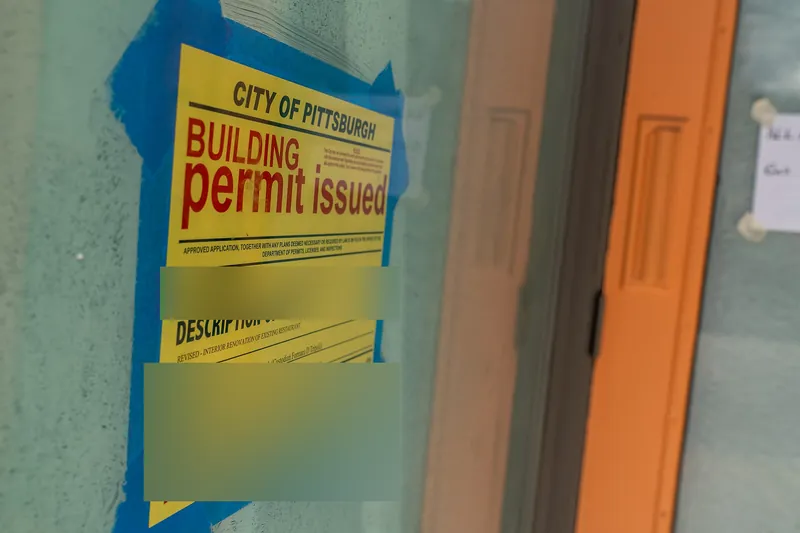
A permit is a separate matter from the energy code. A job can sit entirely outside HERS and still need a permit. Worcester’s landlord guide to inspectional services says a building permit is needed to install or alter equipment in a building, and also to change or move an egress or what holds it up. Don’t let "the stretch code doesn’t apply" turn into "no permit needed." Those are two different questions with two different answers.
When does an older house renovation need a HERS rating?
Only at the larger end: the state FAQ points to Level 3 or extensive alterations over 1,000 square feet or 100 percent of the existing conditioned floor area. HERS stands for Home Energy Rating System, a scored assessment by a certified rater, and the rater’s work includes a blower door test, in which a fan set in a doorway measures how leaky the house is. For alterations at that level, there’s generally no prescriptive path, meaning you can’t simply follow a checklist of insulation values to comply.
The Level numbers come from the existing-building code. We won’t paraphrase those definitions here, since a shorthand version is how people talk themselves into the wrong box, and your building official classifies the job in any case. What you can do is arrive with the two figures the FAQ language turns on: the square footage of the area you’re altering, and the conditioned floor area of the house.
Here’s how that arithmetic plays out on two hypothetical houses. These are examples of how to do the sums and aren’t rulings. Picture a 1,400-square-foot Cape. A rebuilt 200-square-foot kitchen is 200 divided by 1,400, or about 14 percent of the conditioned floor area, and well under 1,000 square feet. Now picture the same Cape stripped to the studs across 1,100 square feet. That’s over the 1,000 figure, so the HERS question should be the first one you ask. Finally, picture a small 900-square-foot house gutted entirely. It never reaches 1,000 square feet, but it does reach 100 percent of its conditioned area, so raise that wording with the official first.
Don’t let "the stretch code doesn’t apply" turn into "no permit needed." Those are two different questions with two different answers.
Additions have their own line. Those under 1,000 square feet can use a prescriptive path. If yours is larger, or if the addition arrives together with a substantial renovation of the existing house, ask how the two are counted. We can’t tell you from the FAQ alone.
Who actually decides, and what permit does the job need?
Your local building department decides, and the person to ask is the building official or inspector, not the installer, a salesperson or this magazine. Bring a written scope, with the two square footage figures, and ask three plain questions. What level of alteration is this? Which energy path applies? Which permits does this work need, and who pulls them?
In Worcester, the Building & Zoning division handles permits for plumbing, gas, electrical and sheet metal, among others. Its mechanical permit page describes residential mechanical applications as covering up to 3 dwelling units, with larger buildings going the commercial route. That’s a tidy line for a three-decker owner and a warning for anyone with a row of four. Online and mail applications need registered license and workers’ compensation documents, so a contractor who hesitates to provide them has told you something. We couldn’t verify current fees, because the schedule we found was old, so ask.
Outside Worcester we can’t give you permit details, because we didn’t find them for other towns. A call or visit to the building department will do what no article can. The contractor’s paperwork should name who is responsible, and the bid story covers how to check that line before you sign.
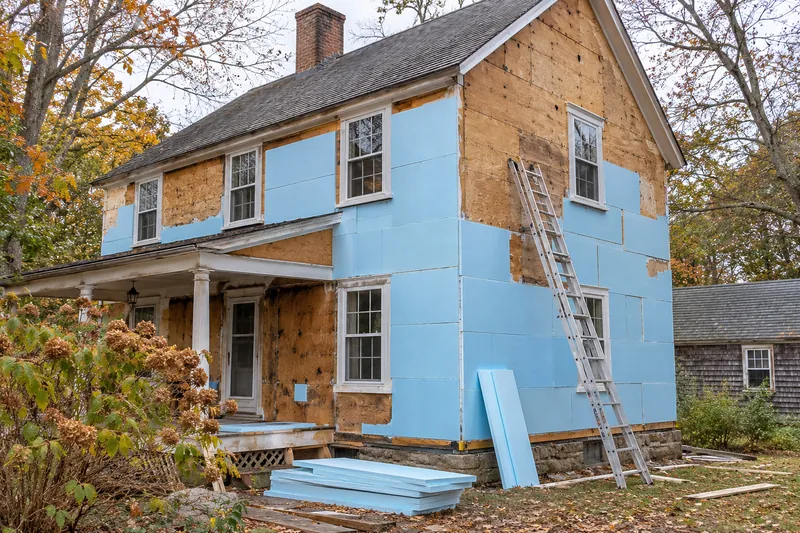
Two more people may have a say. Local historic districts are another case: if your street is in one, ask the commission first, ahead of any outside work. In a triple-decker or a condo, the owner or association, not the tenant or a single unit owner, generally decides building-wide work, and our story on who decides walks through those lines. For a building with open stud bays running floor to floor, ask your building department and insulation contractor what the plan does about them; the balloon frame story explains why it comes up.
How does a big renovation affect rebates and old-house hazards?
A big renovation can cost you the rebate, and it will almost certainly raise the question of what’s in the walls. The 2026 Mass Save rebate form says the offer isn’t applicable to new construction and major renovation projects. The form doesn’t define major renovation, and you shouldn’t assume it matches any code threshold. So a project large enough to raise the HERS question should also prompt a separate question to the rebate program, before you count on the money. The rebate story has the rest of the conditions.
Opening up an old house also meets its materials. Pipe wrap, duct tape and vermiculite in a wall or attic are not to be disturbed; in Massachusetts, handling is reserved for contractors the Department of Labor Standards has licensed, with notice to MassDEP and the department at least 10 working days before removal. Paint in pre-1978 housing brings the lead renovation rule into play for anyone paid to disturb it. A code-driven schedule has to leave room for those steps, and our Colonial story on what stops the job sets out who does what first.
The state FAQ doesn’t describe a heat pump job on its own as bringing a HERS rating into the picture, though we’d still confirm that at the counter. Larger renovations can, and the deciding voice belongs to your building department in every case.
What it comes down to
- If You’re swapping heating equipment and altering nothing else
- Then Expect a permit question rather than a HERS one, and confirm it with the building department
- If You’re altering more than 1,000 square feet or all of the conditioned floor area
- Then Ask about a HERS rating first, and line up a rater before the design is frozen
- If You’re adding under 1,000 square feet
- Then Ask whether the prescriptive path fits, and how any linked renovation is counted
- If The house is in Worcester
- Then Renovations and additions follow the stretch code; new construction follows Specialized since July 1, 2024
- If The house is in any other town
- Then Check the state’s adoption list and your building department; don’t rely on a neighbor or a contractor’s memory
Also asked
Does the stretch code make me insulate the whole house?
Not because a small repair happened. Level 1 and 2 alterations follow the base existing-building chapter, and the FAQ’s HERS requirement sits at the larger end. If your job is large, the rater and the official will tell you what your path requires.
Is a Home Energy Assessment the same thing as the stretch code process?
No, and the two serve different masters. The assessment is a Mass Save program visit that feeds rebates and weatherization offers, covered in our story on the assessment and the loan. A HERS rating is a code compliance step on certain alterations.
Can my contractor just handle all of this?
A contractor can pull the permit they’re licensed to pull and can advise you, and many do both well. You remain the owner of the house, so ask to see the license and insurance, and ask which permits are being pulled and by whom. Make the answers part of the contract.
Where do I find the current code text?
Worcester’s inspections page points to the state Department of Energy Resources, which maintains the code requirements, updates and technical guidance. The state’s site is the place to check when you see a claim you doubt, and that includes any claim printed here.
Where this comes from
- Mass.gov, building energy code adoption by municipality: adoption counts as of Oct. 27, 2026
- Mass.gov, stretch and Specialized code FAQ: alteration levels, HERS thresholds, blower door, prescriptive paths, heat pump credit
- City of Worcester, Inspectional Services: Worcester’s Specialized adoption and how it divides new work from renovations
- City of Worcester, Building & Zoning and mechanical permits: permit types, dwelling unit limit, application documents
- City of Worcester, landlord guide to inspectional services: when permits are required
- 2026 rebate form from Mass Save (National Grid copy): major renovation exclusion
- EPA, asbestos exposure and Renovation, Repair and Painting Program: asbestos and lead cautions
- Mass.gov, guide to household hazardous products and MassDEP asbestos resource guide: licensed contractor and notice period