Asbestos Pipe Wrap and Lead Paint: What Stops the Job
Asbestos pipe insulation in an old house stops the job until a licensed contractor deals with it or the plan leaves it undisturbed. Lead paint doesn’t stop the work, but anyone paid to disturb it in a pre-1978 home must be certified.
- The house
- A pre-1978 Colonial with white wrap on the basement mains, layers of old paint on the trim and a dusty attic
- The decision
- Who touches what before anyone drills?
Heating Older Houses · 10 min read · Updated
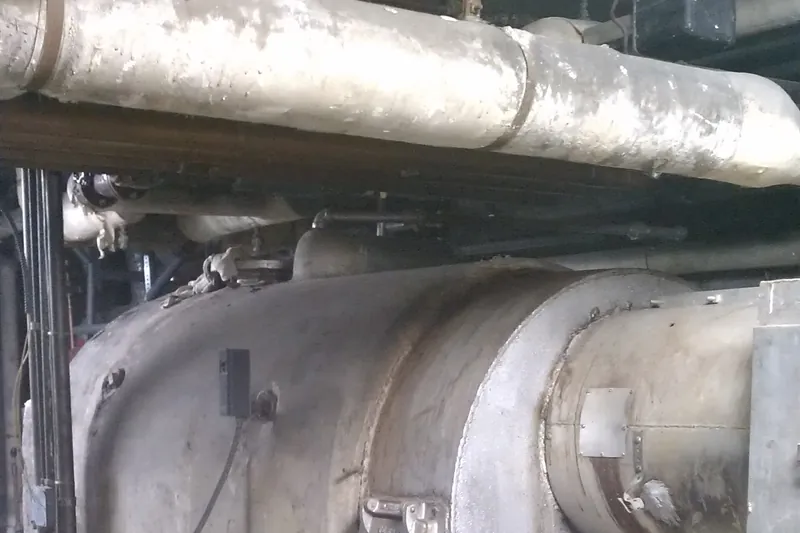
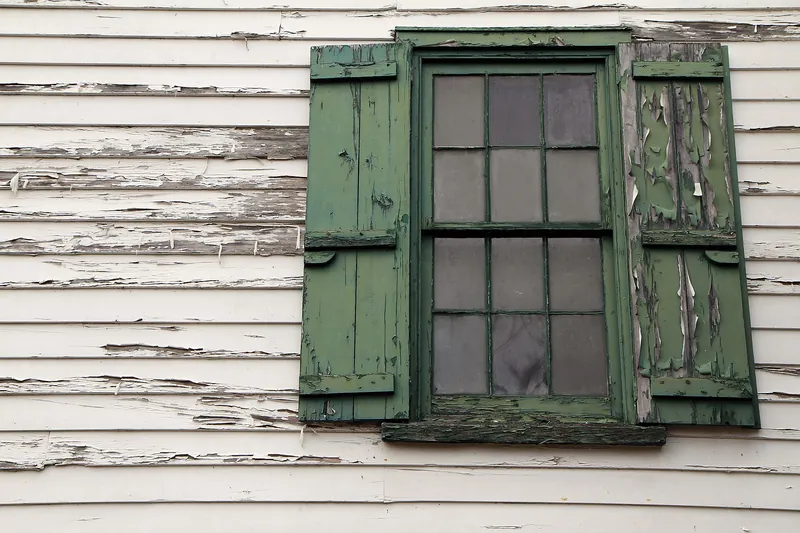
Heating work begins in the places an old house keeps its secrets. A crew heads for the basement, where the mains run under a white, chalky jacket gone gray at the elbows. They head up to the attic, where the insulation between the joists looks like small gravel. They walk around outside with a drill and pick a spot on clapboard that has been painted a dozen times since the house was built. None of it looks dangerous, and when it’s intact and undisturbed it may have sat there for decades.
That’s the odd thing about asbestos and lead in an old house. Mostly the risk comes from the job, not the material. An undisturbed pipe wrap in good shape is one thing, and the same wrap cut through with a reciprocating saw so that a new line can pass is quite another. So the question to settle first is an ordering question, and the answer should be on paper before anyone brings a drill through the door: who looks at what, who may touch what, and what happens if something unexpected turns up behind the wall.
Our rule of thumb is simple enough to tape to the basement door. You don’t touch it. Your heating contractor doesn’t touch it unless they’re certified or licensed for that specific thing. Nothing gets cut, drilled or swept until someone has said what it is.
Is that white pipe wrap asbestos?
You can’t tell by looking, so treat it as though it is until a professional says otherwise. The Environmental Protection Agency says that you generally can’t tell whether a material contains asbestos simply by looking at it, unless it’s labeled, and the agency specifically names pipe, furnace and boiler insulation among the materials owners may have to deal with.
The temptation is to take a little piece and mail it off. Don’t. EPA’s guidance is that taking samples yourself isn’t recommended, and that sampling is for a trained and accredited professional. You also don’t need a test merely to live with it: EPA says materials in good condition that won’t be disturbed don’t need testing. What changes the picture is a project. An inspection is called for before remodeling that could disturb the material, or if it’s already damaged, and a heat pump job that takes out a boiler or reroutes pipe may be exactly that.
The same care applies if your old Colonial has ducts somewhere, perhaps from a later air conditioning job. PNNL’s guidance on metal ducts says asbestos insulation or tape on ducts should not be disturbed, and that a remediation professional should be consulted. So the white tape on an old joint belongs in the same category as the white wrap on a main.
Does asbestos pipe insulation have to come out before HVAC work?
No, not if the work will leave it alone and it’s in good condition. EPA’s position is that sound, intact material is usually better left in place, because fibers get released when it is disturbed. Plenty of heat pump jobs never come near the basement mains at all: a line set runs through a rim joist on the far side of the basement, or up an outside wall, and the wrap sits there as it always has. If that really is the plan, say so in the contract and have the crew walk the route with you.
The trouble comes with removal jobs. Taking out a boiler usually means disconnecting pipes at or near the boiler, and that’s where old insulation lives. Removing a radiator or abandoning a main does the same. So a boiler coming out is the moment to treat this as a live question, along with anything that adds new pipe alongside the old. PNNL’s boiler replacement checklist expects contractors to inspect accessible pipes and radiators for damage or asbestos before work begins and to report any problem to the homeowner. Ask for that report in writing. If a bid never mentions it, that’s your cue to ask why.
Who can legally remove asbestos in Massachusetts?
A contractor licensed by the state’s Department of Labor Standards, and that is who you want doing it. The state’s household hazards guide says asbestos is handled only by a licensed contractor, and the MassDEP resource guide adds a timing rule that catches people out: notice on form ANF-001 goes to MassDEP and the Department of Labor Standards at least 10 working days before removal.
A narrow exemption exists for certain non-friable material in owner-occupied single-family homes. We don’t encourage anyone to use it, and it’s no reason to take a scraper to basement pipe wrap. Removal is complex, EPA says, and must be done only by trained and accredited people. Ask the abatement contractor for their license, and ask them to explain how the area will be contained, how the waste will leave the house, and what you’ll receive in writing when they finish.
Those 10 working days change the order of everything. Published 2026 rebate terms require installation within calendar 2026, so a late-year job that needs abatement has less slack than the calendar suggests. Find out what’s on your pipes early, and don’t sign an installation date that ignores the notice period.
Mostly the risk comes from the job, not the material.
What does lead paint change about HVAC work?
It changes who may do the work and how, more than whether it can happen. In a home built before 1978, the EPA’s Renovation, Repair and Painting program requires that anyone paid to perform work that disturbs painted surfaces be certified, and EPA warns that this kind of work can easily create dangerous lead dust. About three-quarters of pre-1978 homes in the country still contain some lead-based paint, according to the same page. Massachusetts runs its own authorized program, and we couldn’t confirm the details of its deleading license rules, so ask the state program directly if your project goes beyond ordinary heating work.
In an old Colonial, this reaches further than you might think. A hole for a line set goes through painted clapboard or trim. A mounting plate for an indoor head goes into a painted plaster wall. Pulling a radiator can disturb paint on the unit and behind it, and so can a chase built up a bedroom corner. Each of those is work on a painted surface by someone you’re paying, which is what the rule addresses. So ask every bidder, not only the painter, whether their firm is lead-safe certified, and ask to see the certificate. EPA notes that the requirement covers all firms, even sole proprietorships.
The homeowner’s own exemption has limits worth knowing. Owners working on their own home are generally exempt, but the rule applies if you rent out part or all of the house, so a two-family Colonial or a rented apartment over the garage brings you inside it. Being exempt also doesn’t make dust harmless to your household. Don’t sand or scrape it; we’d have a certified firm do that work.
| Material | Where you’ll meet it | What the crew may do | Who deals with it |
|---|---|---|---|
| Pipe wrap, boiler insulation | Basement mains, elbows, boiler jacket | Stay clear; route around it | Licensed asbestos contractor |
| Tape or insulation on old ducts | Duct joints, attic and basement runs | Leave alone | Remediation professional, then licensed abatement |
| Vermiculite | Attic joists, some wall cavities | Stay out until a plan exists | Professional contractor before any disturbance |
| Painted clapboard, trim, plaster | Line-set holes, head mounts, chases | Only lead-safe work practices | EPA or state-recognized certified firm |
What about the insulation in the attic?
If it looks like small pebbles, treat it as possibly contaminated with asbestos and stay out of it. EPA describes vermiculite insulation as pebble-like and gray-brown or silver-gold in color, often sold under the name Zonolite, and says a single mine in Libby, Montana, supplied more than 70 percent of the vermiculite sold in the United States from 1919 to 1990. EPA’s advice is to assume it may be contaminated and not to disturb it. MassDEP’s guidance agrees and adds that you should hire a professional contractor before any renovation that would disturb it.
That matters for heating work in more than one way. An attic is often where someone wants to run a line set or a compact duct, or to add insulation before a heat pump goes in, because air sealing often comes first in a cold-climate retrofit. If the assessor or the crew finds vermiculite, the attic job stops being routine. Tell whoever does your Home Energy Assessment if you’ve already seen it up there, and ask how the program handles it before you count on the insulation offers.
Money may help, though we can’t promise it applies to you. The HEAT Loan covers what the program calls pre-weatherization barriers, and income-verified customers may have electric panel work or health and safety work ahead of weatherization covered up to 100 percent. Whether your asbestos or vermiculite finding counts is a question to ask at the assessment, in those words.
In what order should the work happen?
Look first, test if the plan will disturb anything, abate if needed, and only then let the heating crew in. Written out, a sensible sequence runs like this. First, walk the house with each bidder, basement to attic, and ask them to mark their proposed route for pipe, line set and wire. Second, wherever that route touches suspect material, bring in a trained professional for an inspection before the contract is final. Third, if something has to come out, hire a licensed contractor and allow for the 10-working-day notice. Fourth, book the certified lead-safe work for any painted surfaces. Fifth, get the heating crew in, with the route agreed.
We’d also add a stop-work line to the contract. Something like: if the crew finds suspect material outside the agreed route, they stop, tell the owner, and don’t continue in that area until it’s been assessed. Agree in advance how extra cost and time get handled, since an argument at that moment is how shortcuts happen. The same sentence protects the crew too, who breathe that dust far more often than you do.
If your house is rented, or part of it is, the owner makes these calls. A tenant who spots damaged pipe wrap should keep clear of it and tell the landlord promptly, and the who-decides story has more on how those roles divide. If an oil tank is coming out at the same time, that job can disturb the same pipes, so plan them together.
What it comes down to
- If The heating route stays clear of old wrap and the wrap is in good condition
- Then Leave it alone and write the route into the contract
- If A boiler, radiator or main is coming out and old insulation is attached
- Then Get a professional inspection, and if needed a licensed contractor, before the heating crew starts
- If You see pebble-like attic insulation
- Then Assume it may contain asbestos, stay out of it, and hire a professional before any attic work
- If Paid work will disturb paint in a pre-1978 house
- Then Hire a certified lead-safe firm, and ask to see the certificate
- If Your rebate depends on a 2026 install date
- Then Allow for the 10-working-day asbestos notice now, not in December
Also asked
Can I just wrap tape over the damaged spot?
No. EPA treats repair as sealing or covering work for professionals, and handling damaged material yourself can release fibers. Limit access to the area and call someone licensed.
Should I tell the heating contractor what I suspect?
Yes, and before the site visit if possible. They need to plan the route around it, and their crew should know what they may encounter. Put what you’ve told them in an email so that there’s a record.
Does the lead rule apply if I paint the patch myself afterward?
The certification rule generally doesn’t reach owners working on their own homes, unless the house is rented or used as a childcare center. The dust is just as harmful either way. Don’t sand or scrape it; we’d have a certified firm finish the patch.
Who pays if the crew finds asbestos mid-job?
That depends on your contract, which is the reason to settle it beforehand. A clause that says work stops in that area and any extra cost is agreed in writing before resuming keeps everyone honest.
Where this comes from
- EPA homeowner guidance on asbestos exposure: identifying, testing and leaving asbestos alone; do’s and don’ts
- EPA, asbestos-contaminated vermiculite insulation: how vermiculite looks and how to treat it
- EPA Renovation, Repair and Painting program: certification, pre-1978 homes, rentals and dust
- Massachusetts household hazardous products guide: licensed contractors for asbestos
- MassDEP asbestos information resource guide: ANF-001 notice period
- MassDEP asbestos regulation FAQ: vermiculite and renovations
- PNNL, sealed and insulated metal ducts: asbestos on ducts
- PNNL, oil or gas boiler replacement checklist: inspecting pipes before work begins
- Rebate form for 2026, National Grid’s copy: 2026 installation window
- Mass Save enhanced heating and cooling rebates: health and safety work for income-verified customers