The Boiler Leaves, the Water Heater Stays
An orphaned water heater, left alone on a chimney built for a boiler, may not vent properly and raises carbon monoxide concerns. Have a pro test it. We’d lean toward a heat pump water heater, and reline when that won’t fit.
- The house
- A two-story Colonial with a brick chimney, a boiler on its way out and a fuel-burning water heater venting into the same flue
- The decision
- Reline the chimney, or change the water heater too?
Heating Older Houses · 11 min read · Updated
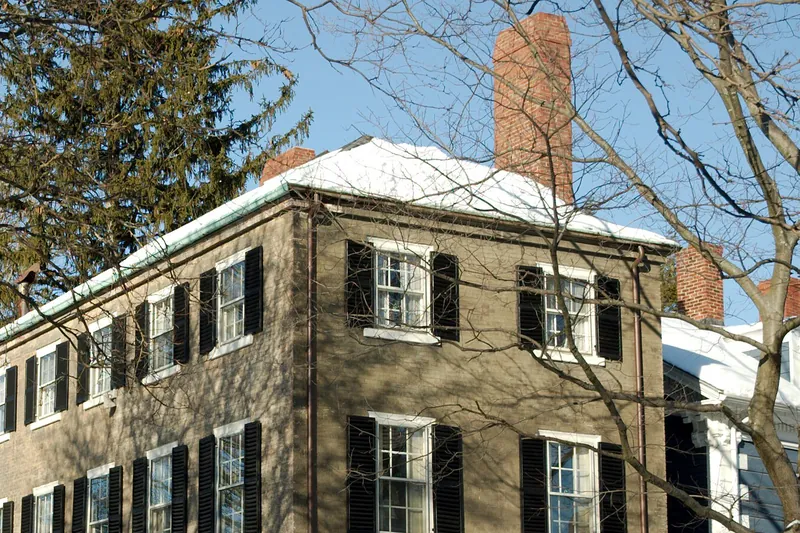
Follow the sheet-metal vent up from the water heater in an old Colonial’s basement and you’ll usually see it join something bigger. A second, fatter pipe comes across from the boiler, and the two meet at the masonry of the chimney, a stack of brick that has carried the fumes of this house upward through coal, oil and gas. The two appliances have been sharing that chimney for a long time. Each one has been helping the other without anyone intending it, because the larger appliance kept the whole flue warm.
Now imagine the heat pumps are in and the boiler goes out the bulkhead. It feels like the end of a chapter, and the basement looks wonderfully empty. But the small appliance beside it is still burning fuel and still sending its exhaust into a chimney sized for something much larger, and nobody has asked whether that still works.
This is called an orphaned water heater. It’s one of the more dangerous gaps in a heating conversion because it falls between trades: the heat pump installer may not treat it as their job, and the water heater has been behaving perfectly well until now. Before the boiler leaves, get an answer in writing. Our own preference is to change the water heater as well, when a heat pump model fits the house, and to reline the chimney when it doesn’t or when the heater is young.
What is an orphaned water heater?
It’s a fuel-burning water heater left as the only appliance on a vent or chimney it used to share with a boiler or furnace. A Department of Energy workshop presentation describes the remaining vent as drastically oversized for what’s left, and warns that serious carbon monoxide concerns may arise. Pacific Northwest National Laboratory puts it in similar terms in its boiler replacement checklist: a water heater still connected to an existing vent or chimney may have inadequate draft to remove its combustion emissions, and the contractor is expected to tell the homeowner what remediation is needed, such as a chimney liner.
Draft is the upward pull that carries exhaust out of the house. An oversized, cold flue with a small appliance at the bottom is a weak puller, and a weak pull on a cold morning means exhaust may linger or spill back into the basement. A chimney that has served well for generations can change character when its biggest user goes away.
The same problem appears whether the boiler is replaced by a heat pump or by a new direct-vent boiler that exhausts through a side wall. What matters is that the chimney’s main appliance has left. It’s the kind of question you can ask of any heating bid, as we explain in reading a heat pump bid.
How do you know if this applies to your house?
Look, but don’t touch. Go down to the basement and trace, with your eyes, the vent pipe from the top of the water heater. If it joins the boiler’s vent or enters the same chimney, you’re in this story. If your water heater is electric, there’s no vent and you’re not. If you have no separate water heater at all, because the boiler makes your hot water, then your hot water leaves with the boiler, which is a different problem but also needs solving before the job begins.
Then ask the person proposing the work a direct question: "What happens to the water heater’s venting when the boiler goes?" A good answer names a test and a remedy. A vague one ("should be fine") is a warning. Ask for the plan on the proposal itself, and make sure the price of that plan is on there too, because the job isn’t complete without it.
Can you just leave the water heater on the old chimney?
Not without a professional testing it, and we wouldn’t plan on that test passing. PNNL’s checklist says that a combustion safety test shall be performed after installation is complete, and that’s what you want written into the job. DOE’s weatherization standards give a sense of what those testers look for: they treat spillage lasting more than two minutes in a pressure test as something requiring mitigation, and call for chimney liners to be installed to code. Spillage means exhaust coming back into the room rather than going up the flue.
This testing isn’t something an owner can do, and we won’t describe it as though it were. Don’t try your own version with smoke or a flame, don’t disconnect or adjust anything, and don’t patch any gaps around the vent or chimney. Sealing around a flue changes how it behaves, and it’s for a pro to judge. PNNL’s checklist does expect that any chimney opening left unused after a boiler swap gets sealed, and that’s the contractor’s task, followed by their combustion test.
The test matters again after any weatherization. Tightening a house with air sealing changes the air around a fuel-burning appliance, so if your assessment leads to insulation and air sealing, combustion safety checks by a professional should follow. DOE’s combustion safety guidance is written for those crews and explains that a sound chimney liner and connected, unblocked vents are part of a safe system.
When does relining the chimney make sense?
Relining makes sense when the water heater is fairly new, when it suits your household, and when a heat pump model won’t fit the space or the budget. A liner is a new flue run down inside the old chimney, sized to the appliance that’s actually left. It lets the existing heater keep doing its job, and it’s the remedy PNNL names first. DOE’s standards call for it to be installed to code, so ask who’s pulling the permit and who inspects it.
The downside is that you’ve spent money on a chimney to serve a machine that will someday need replacing, and you’re still burning fuel in the basement, with the combustion safety duties that go with that. If the water heater is near the end of its service life, relining the chimney for it strikes us as paying twice. The chimney itself also deserves inspection before anyone quotes a liner, because old masonry can hide problems that a liner quote may not cover. A third path is a new fuel-burning heater vented its own way, not through the chimney at all. Your plumber can tell you if that suits your basement, and it would still need venting and combustion checks by a professional.
| Choice | Fits best when | Watch for | Still burning fuel? |
|---|---|---|---|
| Line the chimney for the existing heater | The heater is young and a heat pump model won’t fit | Permit, chimney condition, combustion test afterward | Yes |
| Heat pump water heater | Basement has the air volume, a drain and a suitable circuit | Basement temperature, noise, electric use | No |
| New fuel heater vented separately | You want to stay on gas or oil and avoid the chimney | Vent route, snow clearance, combustion test | Yes |
When is a heat pump water heater the better call?
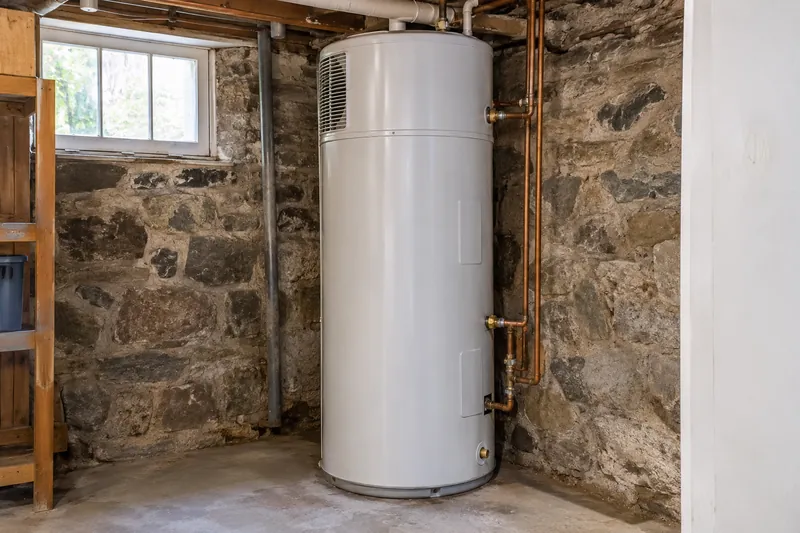
We’d choose it when the boiler is leaving for good and the basement can host it, because it removes the chimney from the question altogether. A heat pump water heater draws heat from the surrounding air, so with no combustion there’s no flue to worry about. Mass Save publishes a $750 per unit rebate for 2026, for ENERGY STAR units with a UEF of 3.30 or higher (UEF is the standard efficiency rating) in 1-4 unit buildings, with the form due by February 28, 2027. The HEAT Loan can also cover these units.
A Colonial’s basement is often a good home for one. ENERGY STAR’s design guidance calls basements, even unconditioned ones, often the best location in any climate, and says manufacturers typically want access to at least 450 or 700 cubic feet of free air space, depending on the model. An 8-by-12-foot room with an 8-foot ceiling meets that figure, as ENERGY STAR’s own example shows. The unit also needs its condensate drained and shouldn’t sit right beside a bedroom, since these machines make some noise.
There are real caveats for an old New England basement. ENERGY STAR notes that intake air below roughly 40 degrees triggers the unit’s electric resistance elements, and efficiency suffers. A basement that used to be warmed by a boiler and uninsulated pipes will be colder without them, and that’s our reasoning, not a measured figure for your house, so ask the installer to think about it. The unit will also pull heat out of the room as it runs, which is fine in summer and less welcome in a chilly basement in February. And your electric bill will rise, as the Mass Save form warns of heat pumps in general. If a new circuit is required, that’s a job for a licensed electrician, not you.
A basement that used to be warmed by a boiler and uninsulated pipes will be colder without them.
What if you smell gas or an alarm goes off during all this?
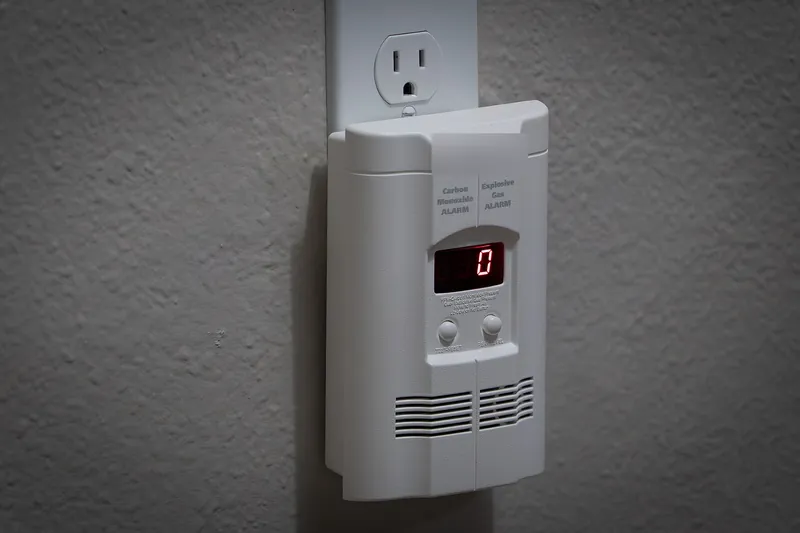
Treat both as emergencies and leave. A CO alarm means everyone out first, and 911 from outside. A gas smell means leave first, with no switches or phones inside. From outside, call 911 and the gas utility, using the emergency number on its website or bill. Save that number somewhere you can reach it from the sidewalk. Don’t investigate, don’t go looking at the water heater, and don’t go back in until responders tell you it’s safe.
The state’s CO guidance is plain about getting outside. We’d add one practical point about the changeover week itself. Check that you have working CO alarms on every level before the boiler leaves, not after, since the period between the removal and the final test is when you most want them. And if your new system or new water heater vents through a side wall, keep those vents clear of snow, as the state advises every winter.
Who signs off on the finished job?
Your building or gas inspector and the contractor who pulled the permit do, and you should see the paper. In Worcester, the Building and Zoning division handles plumbing, gas, electrical and sheet-metal permits, among others. Other towns have their own departments, so ask yours what a liner, a new water heater or a capped-off flue connection requires. Ask to see licenses and insurance, and ask who is pulling each permit.
Your final paperwork should show three things: what happened to the water heater’s venting, who performed the combustion safety test and with what result, and which permits were closed. Keep that with your oil tank paperwork, if you had one. Anyone touching old pipes on the way out should also know about asbestos and lead before they begin.
What it comes down to
- If The water heater shares the chimney and the boiler is leaving
- Then Get a written plan for venting and a combustion safety test before the boiler goes
- If The water heater is near the end of its life and the basement has room and a drain
- Then Replace it with a heat pump water heater and retire the chimney question
- If The water heater is fairly new or a heat pump model won’t fit
- Then Have the chimney inspected and lined to code, with a permit
- If The boiler itself makes your hot water
- Then Choose a new water heater as part of the heating job, not after it
- If Your assessment adds air sealing
- Then Have a pro repeat the combustion safety checks once that work is finished
Also asked
Could the old chimney just be used for nothing at all?
Yes, once nothing vents through it, and that’s one appeal of going electric on both jobs. Ask your contractor what should be done with the unused connection and with the chimney over time, and leave any sealing to them.
Does a small gas leak or a faint exhaust smell count as an emergency?
Treat any gas smell as one: leave first and make your calls from outside. If anyone feels headachy, dizzy or sick, or the exhaust smell is strong, get everyone out and call 911 from outside, alarm or no alarm. Otherwise don’t try to diagnose it yourself: have it checked today by a qualified professional. If the CO alarm is sounding, everyone gets out first.
Will a heat pump water heater keep up with a big household?
That’s a sizing question for your installer, who should ask how many people live in the house and how you use hot water. Be frank with them about long showers and laundry habits. Ask what happens when demand runs high and what the backup electric element will do to your bill.
Is the rebate affected if I change the water heater later?
The $750 figure is for units installed in calendar 2026, with the form due by February 28, 2027. A later install would fall under whatever the program publishes then, so check before assuming.
Where this comes from
- PNNL, oil or gas boiler replacement checklist: inadequate draft, chimney liners, combustion safety test
- U.S. Department of Energy workshop presentation: oversized vents and carbon monoxide concerns
- U.S. Department of Energy Standard Work Specifications: chimney liners to code, spillage testing
- U.S. Department of Energy combustion safety guidance: inspecting vents and chimneys
- Mass Save heat pump water heaters: rebate terms for 2026
- Mass Save financing: HEAT Loan coverage
- ENERGY STAR heat pump water heater design considerations: air volume, basements, cold intake air, noise
- Mass.gov on smoke and CO alarms: the law and the response
- Massachusetts winter weather advisory: keeping vents clear of snow
- Worcester Building and Zoning: permit types